
Watering houseplants
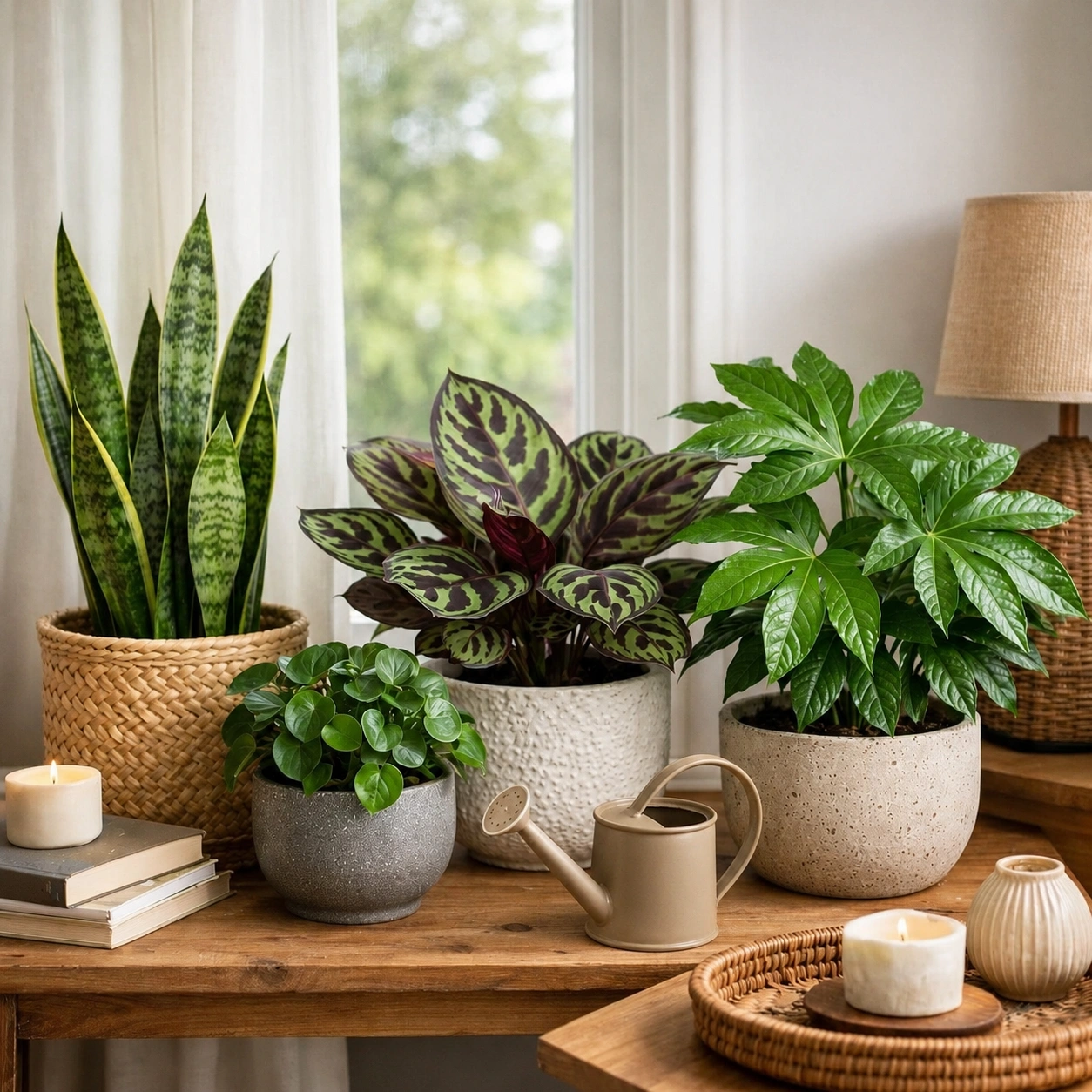
Discover exactly when and how much water to give your houseplants to keep them healthy and strong in every season. With these practical tips, you will avoid common mistakes and ensure your green friends are always in top condition. Let’s dive in!
Watering Houseplants: Complete Guide for Healthy Plants
Watering houseplants is one of the most important parts of plant care. In this guide, you’ll learn exactly when to water, how much water plants need, and how to avoid common mistakes. This will help keep your plants healthy throughout every season.
When should you water houseplants?
The best way to determine if your houseplants need water is by checking the potting soil.
Here’s how:
- Stick your finger about 5 cm (2 inches) into the soil
- Dry? → Water the plant
- Moist? → Wait a little longer
The top layer may feel dry while the plant still has enough moisture deeper in the pot.
What type of water is best for houseplants?
Not all water is ideal for plants.
Best options:
- Rainwater (best choice)
- Filtered or low-lime water
- Room-temperature water
Avoid using cold tap water straight from the tap, as it can stress the roots.
How often should you water houseplants?
The frequency depends on the season, plant type, and location.
General guidelines:
- Summer: 1–2 times per week
- Spring/autumn: about once a week
- Winter: every 1–2 weeks
Important: always check the soil first instead of watering on a fixed schedule.
How much water does a houseplant need?
Not every plant has the same water requirements. We can divide them into 3 groups:
1. Plants that need a lot of water
Keep the soil slightly moist, but never soggy.
Examples:
- Calathea
- Peace lily
- Ferns
- Palms
- Ivy
2. Plants with average water needs
Allow the top layer of soil to dry slightly between waterings.
Examples:
- Philodendron
- Peperomia
- Spider plant
- Jasmine
- Cyclamen
3. Plants that need little water
These plants store water in their leaves or stems.
Examples:
- Cactus
- Succulents
- ZZ plant
- Money tree
- Snake plant
Overwatering is the most common mistake.
How do you water houseplants correctly?
For healthy root growth:
- Always water near the roots
- Avoid getting water on the leaves
- Water thoroughly once instead of giving small amounts frequently
- Use room-temperature water
Giving small amounts of water every day can weaken plants and make them more sensitive to drought.
Watering houseplants by season
Spring
Plants come out of dormancy → gradually increase watering and optionally add plant food.
Summer
Faster evaporation → check plants more often and water when needed.
Autumn
Growth slows down → reduce watering.
Winter
Resting period → plants need very little water, always check the soil first.
Heating, air conditioning, and humidity
Heating and air conditioning create dry air, which affects houseplants:
- Potting soil dries out faster
- Plants may need more water
- Increased risk of stress or pests
Tip: group plants together or regularly mist tropical plants. This slightly increases humidity.
Should you mist houseplants?
Misting can be helpful, especially for tropical plants.
Benefits:
- Increases humidity
- Keeps leaves dust-free
- May help prevent pests
Important: misting does not replace watering through the soil.
Watering houseplants during vacation
Going on vacation? Use these tips to keep your plants healthy:
- Move plants out of direct sunlight
- Group plants together
- Water thoroughly before leaving
- Use a self-watering system
DIY solutions:
- Plastic bottle with small holes placed in the soil
- Wick system with a water container (capillary action)
Away longer than a week? Ask someone to take care of your plants.
Common mistakes when watering plants
- Watering too often with small amounts
- Not checking the potting soil
- Letting plants stand in water
- Ignoring the season or plant location
Conclusion
Watering houseplants is not about strict rules, but about observing and feeling the soil. By taking the potting soil, season, and plant type into account, your plants will stay healthy and strong for much longer.
Comments
Be the first to comment...